Who uses dictation,
and for what
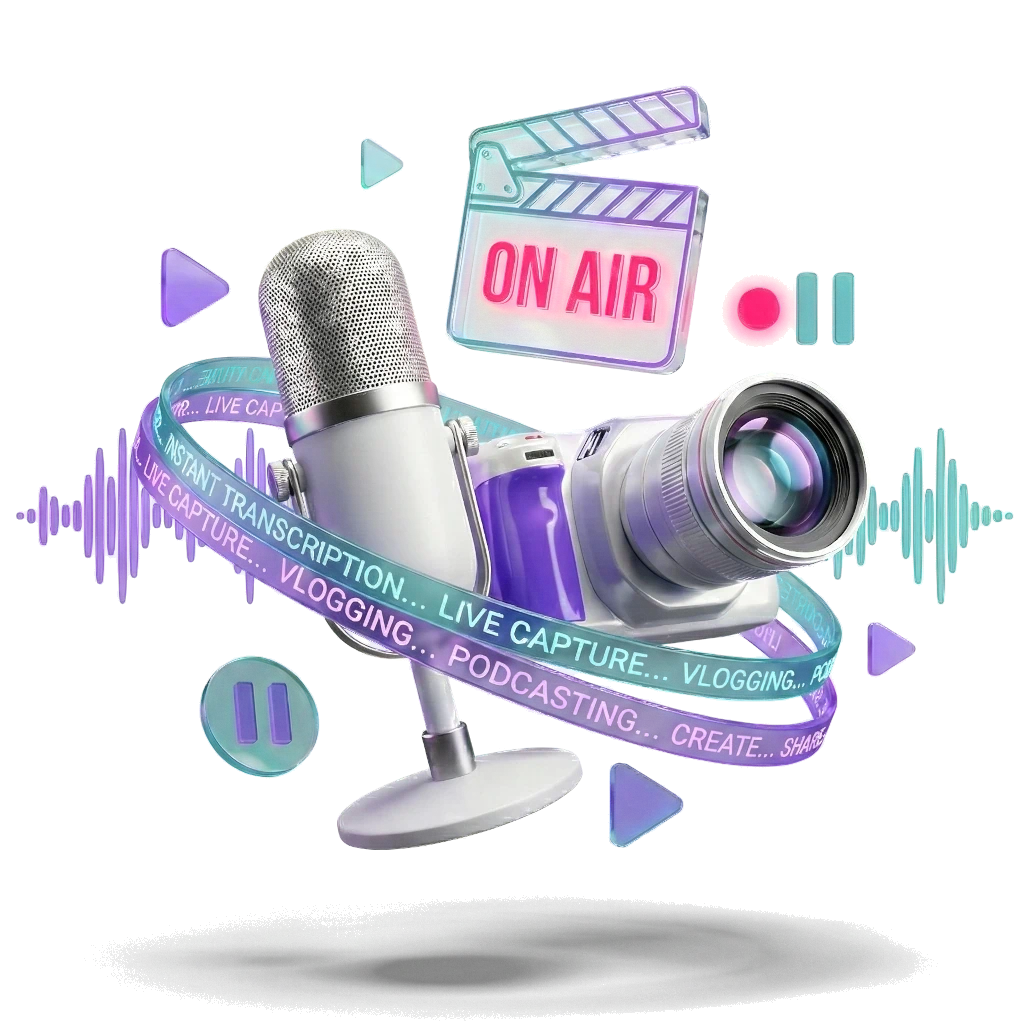
Content creators and field professionals
A phone and a browser. Record where you are, upload from there, read the transcript before you get home.
A recording is one file, so the per-file duration applies: 10 min on Free, 60 min on Pro, and none on Ultra, where the ceiling is the 10GB file instead. Most interviews need more than the free tier allows.
WhatsApp on the go
The version with nothing to install. Forward voice notes from clients, record a thought the moment you stop the car, or transcribe voicemails without ever leaving WhatsApp.
When you cannot play the audio
Forward the voice note to the bot and read it instead of playing it. The text comes back in the same chat, so nothing has to play out loud.
Before you get back to a keyboard
Record the thought as a voice note once you have pulled up, send it to the bot, and the text is waiting when you reach a desk.

Regulated professions
Clinical notes and attendance notes are the two cases where speaking earns the most and where the constraints are worth stating in full — what the vocabulary does and does not cover, where the audio goes, and when to buy a specialist product instead. Each has its own page.
Dictation for clinical notes
Notes spoken between appointments, into practice software, a browser form or a letter.
Read the medical pageDictation for legal work
The attendance note taken while the client is still leaving, into the file you already have open.
Read the legal pageRemote workers and digital nomads
A laptop, a phone, and no desk. The same hotkey works wherever you have opened the lid.
Meeting documentation
Say the summary into your notes the moment the call ends, while the thread is still in your head. A paragraph a colleague can read takes about 20 seconds to say.
Client communication
The reply you would have put off until you were back at a desk, said out loud on the way there.
Project documentation
Read the dashboard and say what it means, instead of switching windows to write it down and losing the thread.

More use cases
Sales and business development
CRM Updates: Dictate the call notes in the car park, before the detail fades.
YouTube descriptions
YouTube Content: Talk through the description while the edit is still open.
Software developers
Code Documentation: Explain what the function does out loud, then keep the half of it that was worth writing down.
Bug Reports: Describe the bug while it is still on screen.
Financial professionals
Investment Research: Dictate the analysis while the model is still open.
Estate agents
Property Descriptions: Describe the property while standing in it.
Education and academia
Research Documentation: Note what a paper actually says while it is still open.
Student Assessment: Write the feedback out loud, one assignment at a time.
What it changes, whatever you do
What speaking changes
- Around 40 words a minute typed against 150 spoken
- Write while walking, driving or away from a desk
- Long first drafts arrive faster than they are typed
- Nothing to open: the hotkey works where you already are
Averages, not our measurement, and correction eats into the gap. Time yourself against your own typing.
When typing hurts
- A dictated paragraph costs no keystrokes
- Stand, walk, or sit back from the screen
- Look away from the display while you work
- Useful where a keyboard is hard to reach or use
We are not clinicians and this is not medical advice. What we can and cannot say about RSI.
Find out whether it suits how you write
Dictation fits some kinds of writing and not others. The free tier is enough to tell which you do.
Free tier: 30 minutes a month, no card.
Last updated .